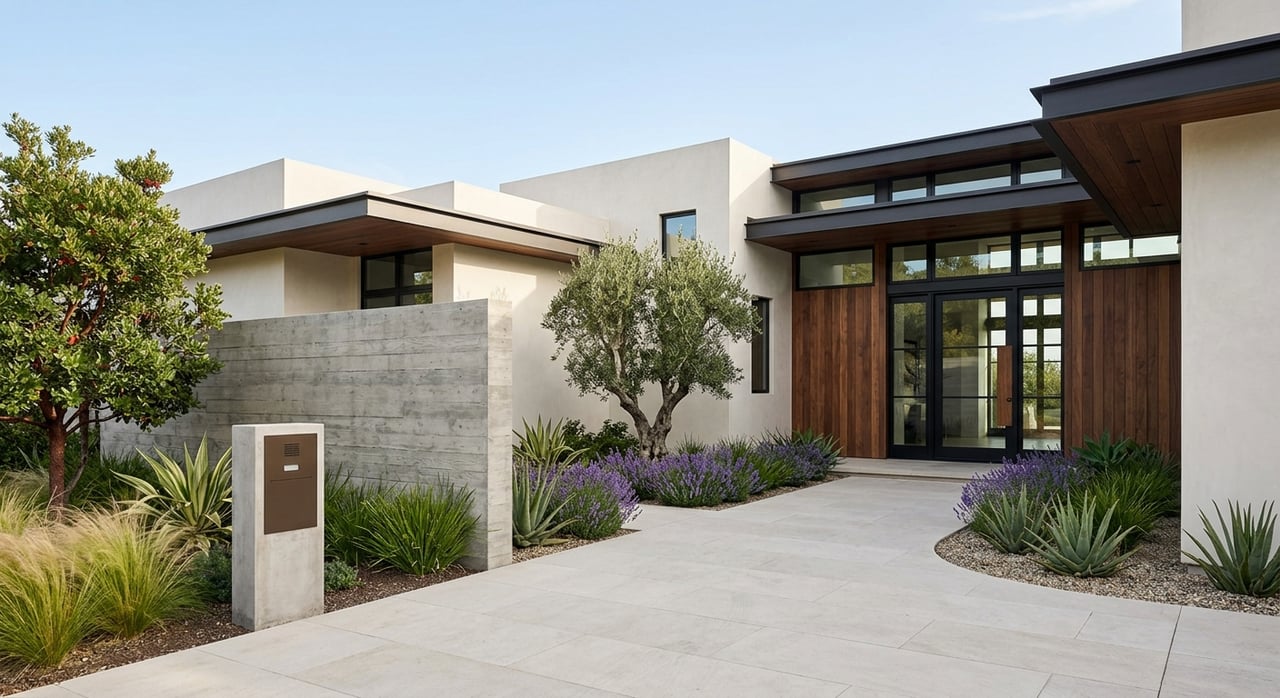
Bel Air Gated Communities: A Buyer’s Guide
You are not just buying a house in Bel Air when you consider a gated property. You are also buying into an access system, a maintenance structure, and in some cases a shared set of rules that shape daily life. If you want privacy without surprises, it helps to know what a gate actually means before you make an offer. Let’s dive in.
In Bel Air, a gate does not point to one single type of home or one single ownership structure. The area includes a wide mix of residential architecture from the 1920s forward, including Colonial Revival, Spanish Colonial Revival, Tudor Revival, French Revival, Mediterranean Revival, Mid-Century Modern, Ranch, and newer modern homes.
That matters because buyers sometimes assume a gated home automatically belongs to a certain kind of community or follows a certain style. In reality, California subdivision types are defined by ownership rights, not by the presence of a gate. A gated Bel Air property may be a standard subdivision, a planned development, or a common interest development, also called a CID.
A gate can create a stronger sense of privacy and separation from the street. For many Bel Air buyers, that is part of the appeal. But privacy comes with procedures you will feel every day.
The Los Angeles Fire Department states that public streets may not be closed by a security gate. Approved gates are generally tied to private streets, access roads, or fire lanes, and they must meet specific requirements such as clear roadway width, stacking space for waiting visitors, and approved emergency override or key access.
For you as a buyer, this means access is not just about aesthetics. You will want to understand exactly how guests, contractors, house staff, service providers, and emergency responders enter the property or community. If access feels complicated during a showing, it is worth asking how that plays out on a normal weekday.
One of the most overlooked parts of gated living is simple logistics. USPS notes that delivery can be blocked when a carrier cannot access a gated community or locked building. In practical terms, package delivery is not always seamless just because a home is high-end.
Before you buy, ask how mail and packages are handled. You should also ask how rideshares, food delivery, and visiting vendors are admitted. These details can affect convenience more than many buyers expect.
Some gated homes in Bel Air are part of a CID or another association structure, while others are not. If the property is in a CID, membership becomes automatic when you acquire the home. In California, the most common association form is a nonprofit mutual benefit corporation.
In those communities, homeowners elect the board, and the board often hires a management company. Many associations also use architectural committees to review exterior changes so improvements stay consistent with the development’s existing architecture.
That review process may matter a lot in Bel Air, where homes span many architectural periods and where exterior presentation can be a major part of value. If you are planning a remodel, façade update, gate upgrade, new landscaping, or exterior addition, you will want to know the approval process upfront.
If a gated Bel Air property is part of an association, document review is essential. California Civil Code requires sellers to provide governing documents before transfer, and these materials can tell you far more than a listing ever will.
Focus on these core items:
These documents may govern rentals, exterior modifications, parking, and use of common areas. They can also show how the association handles planning, maintenance, and enforcement.
The annual budget report deserves close attention. Under California law, associations must distribute an annual budget report 30 to 90 days before the end of the fiscal year, and it includes a pro forma operating budget, reserve summary, and insurance summary.
For buyers, the reserve summary is especially important. It can give you a clearer sense of whether the association appears prepared for future gate, roadway, or other shared infrastructure repairs. If reserves look thin, you may want to ask more questions about future costs.
California law also requires associations to give 30 to 60 days’ notice before any increase in regular or special assessments becomes due. That does not remove the risk of future costs, but it does mean there is a formal notice process for increases.
The biggest difference between gated and non-gated living in Bel Air is often not the home itself. It is the balance between privacy and convenience.
A gate can offer a more controlled arrival experience and a greater sense of separation from public view. At the same time, it can add steps for visitors, deliveries, and service access. It can also create added maintenance responsibilities, especially when private roads, entry systems, or shared infrastructure are involved.
Here is a simple side-by-side look at the tradeoff:
| Consideration | Gated Bel Air Home | Non-Gated Bel Air Home |
|---|---|---|
| Privacy feel | More controlled street access | More open street approach |
| Guest entry | Often requires access procedure | Usually simpler arrival |
| Deliveries | May require gate coordination | Often more direct |
| Maintenance | May include gate or private road obligations | Usually fewer gate-related obligations |
| Flexibility | May be shaped by association rules | Often fewer shared rules |
When you tour a gated home in Bel Air, it helps to go beyond the finish level and views. A few practical questions can save you from expensive or frustrating surprises later.
Ask these early:
These questions matter because the street-facing impression of a property may not tell you much about how the home functions day to day. In Bel Air especially, some homes are designed to orient toward the rear to capture views, so the living experience behind the gate can be very different from what you first see at the entrance.
Bel Air offers architectural range, privacy-oriented design, and a strong sense of place. But gated living is not one-size-fits-all. Two properties may both be behind gates and still have very different ownership structures, access rules, and long-term costs.
That is why careful due diligence matters. You are not only evaluating the home’s design and location, but also the systems and documents that support everyday life there.
The right gated Bel Air home can be an excellent fit if your priorities include privacy, controlled access, and a more separated arrival experience. The key is to match the property’s structure and rules to the way you actually live.
If you want clarity on private access, ownership structure, and the day-to-day realities behind the gate, High-End Estates can help you evaluate Bel Air opportunities with the discretion and broker-led guidance luxury purchases require.
No matter where you are in the buying or selling journey, we’re here to answer your questions and provide expert advice. Contact us today, and let’s make your next move a success.

High-End Estates | CA DRE# 0225